
- 05 Jan, 2025
- Strategy
- By Beverage Automata
Why This One? The Logic Behind Our 2026 Model Selection
Why This One? The Logic Behind Our 2026 Model Selection
The Context: Finding the “Middle Ground”
In the unattended hospitality market, buyers are often forced to choose between two extremes: cheap, fragile vending machines or overly expensive, over-engineered “concept cars.”
As Buy-Side Agents, our goal was to find a unit that sits in the pragmatic middle: industrial durability without the unnecessary premium.
After evaluating multiple options, we shortlisted the 2026 Model. It isn’t the only option on the market, but we believe its technical specifications offer the most forgiving operational buffer for investors. Here is how we interpret the spec sheet.
I. Deployment Versatility (The Location Hedge)
One of the hardest parts of this business is securing the right location. Sometimes, the best spots aren’t inside an air-conditioned mall.
-
The Spec: Indoor / Outdoor Capable with an 800 kg Asset Mass.
-
Our Take: Many machines we tested are strictly rated for indoor use. This limits where you can place them. The 2026 Model’s IP-rated enclosure and substantial weight give you options. If an indoor lobby contract ends, this unit is robust enough to be relocated to an outdoor plaza or park. We value this flexibility as a hedge against location uncertainty.
II. Capacity as a Buffer (Managing Labor)
The reality of operating a robot is that it still needs human help—mostly for restocking. The frequency of these visits determines your labor cost.
-
The Spec: 60-Liter Liquid Payload (Milk) and Dual Hoppers (up to 5kg beans).
-
Our Take: We prioritized high-capacity units. With a 60L milk storage (4 bags), this machine can physically run longer between refills than standard competitors. This doesn’t mean you ignore it, but it creates a larger operational buffer. It reduces the urgency of restocking, allowing for more flexible staff scheduling.
III. Menu Breadth (Future-Proofing)
Consumer trends shift quickly. Today it might be hot lattes; tomorrow it might be iced oat milk matcha. A rigid machine runs the risk of falling behind.
-
The Spec: 6 Syrup Lines, 4-7 Powder Canisters, and Hot/Iced Dual Output.
-
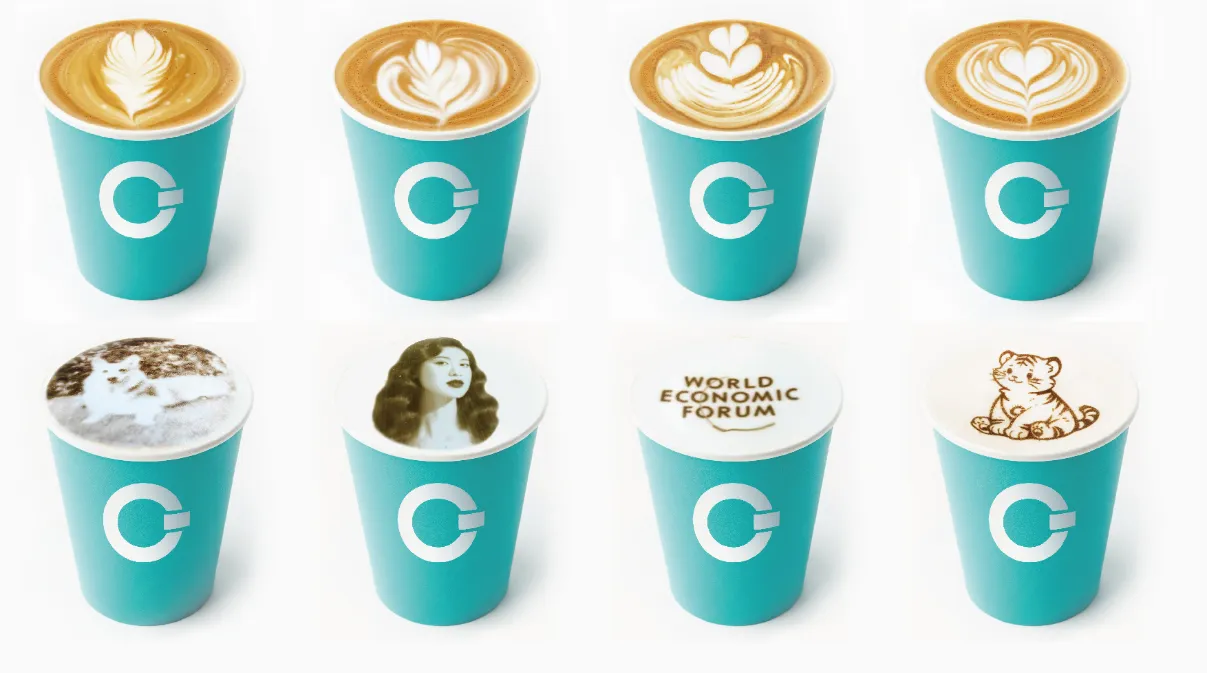
Our Take: We looked for a “Platform” rather than just a coffee maker. The inclusion of 5-level sugar control and Dual Milk systems suggests the hardware is ready for changing demographics (like the rise of plant-based milk). It allows owners to adapt their menu via software updates rather than buying new hardware.
IV. Industrial Standards (Uptime)
For a commercial asset, durability is key. We prefer specs that lean towards industrial standards rather than consumer appliance standards.
- The Spec: 24/7 Continuous Duty Cycle and 3500W-5000W Power Profile.
- Our Take: The power rating indicates a robust heating system capable of recovering quickly. While no machine is immune to maintenance, these specs suggest the unit is built to handle peak-hour stress without throttling performance.
It is designed for continuous throughput, which is essential for ROI in high-traffic zones.
Conclusion
Is this the “perfect” machine? No machine is perfect. Every piece of hardware requires maintenance and care.
However, based on our analysis of the trade-offs, the 2026 Model offers a compelling balance. It trades portability for stability (800kg) and compactness for capacity (60L). For an investor looking to minimize systematic operational risks, we believe this is a rational starting point.
[ View the Full Technical Datasheet ]