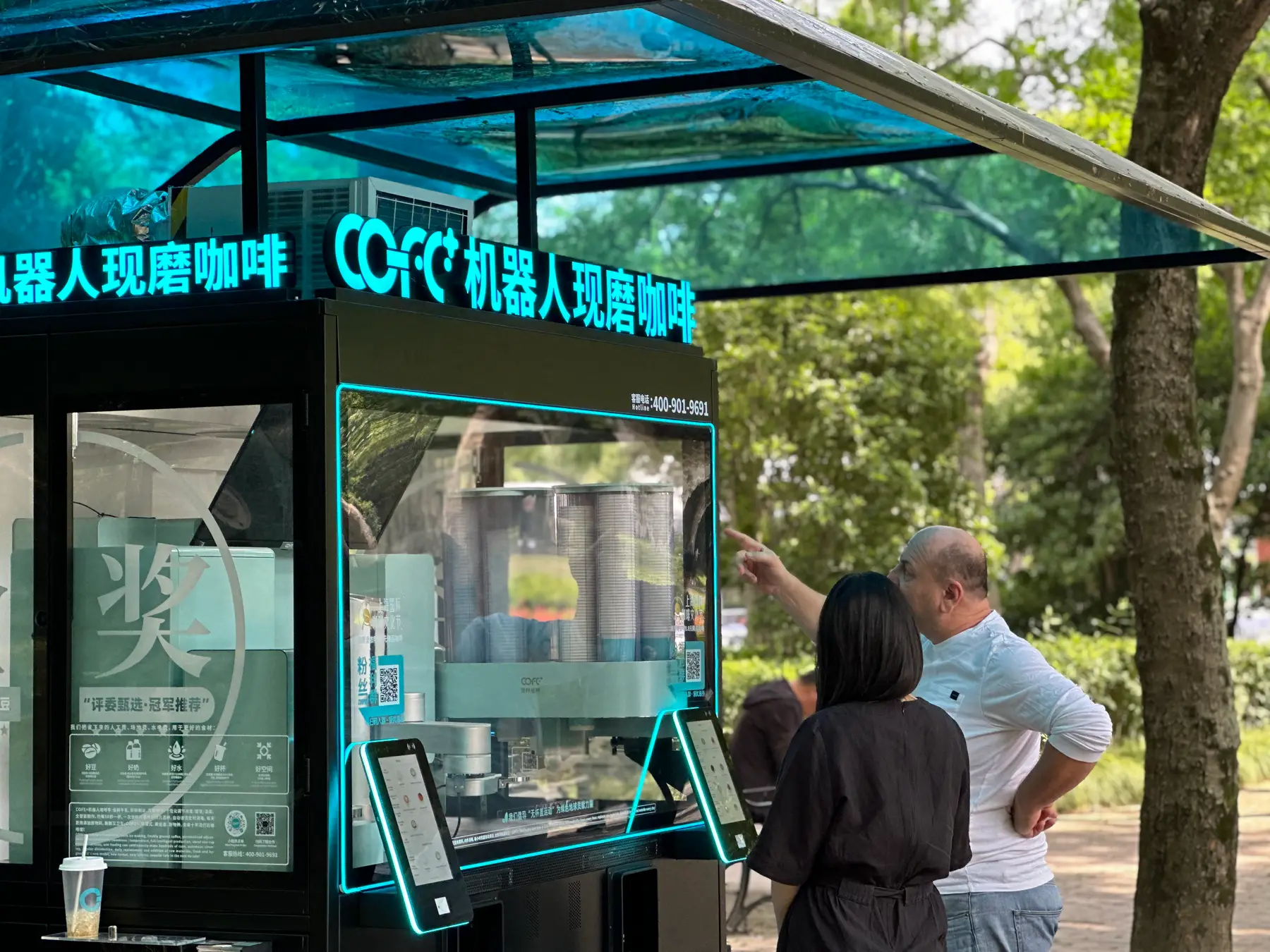
Who this is for: teams making a go or no-go decision on automated coffee kiosk investment.
Direct answer: Use one four-step workflow for every decision: align assumptions, compare capabilities, run ROI scenarios, and complete diligence files. Running these in separate tracks increases hidden risk.
TL;DR / Key Takeaways
- Decision quality falls when whitepaper, comparison, and ROI are disconnected.
- A shared assumption brief should come before modeling.
- Publish base and downside scenarios for every ROI review.
- Require all four workflow steps before final approval.
Step 1: Establish decision criteria
Start with a shared decision brief:
- target payback window
- minimum downside-case margin
- acceptable deployment complexity
- service-level expectations
Use the Whitepaper to align assumptions and terminology before scenario modeling.
Step 2: Compare option sets
Use the Comparison page to evaluate differences that materially impact:
- uptime risk
- labor intensity
- maintenance exposure
- rollout complexity
Step 3: Quantify returns with shared assumptions
Run the ROI model with agreed demand and cost ranges.
For decision clarity, publish:
- base-case output
- downside-case output
- key sensitivities (cups/day, price, labor)
Step 4: Prepare diligence package
Collect decision artifacts via Download Center: whitepaper PDF, technical documents, and operational references.
Use a single go/no-go gate
| Step | Required Output |
|---|---|
| Whitepaper alignment | Shared assumption brief |
| Capability comparison | Risk-impact summary |
| ROI scenarios | Base and downside cases |
| Diligence package | Complete file set for review |
If one output is missing, decision readiness is incomplete.
FAQ: Coffee Kiosk Investment Workflow
Why not start with ROI first?
ROI without aligned assumptions often creates false confidence and rework.
What is the most common workflow failure?
Teams run technical comparison and financial modeling with different assumptions.
How should final approval be documented?
Attach all four outputs to one review record and approve only with downside-case visibility.
Final review gate
A go/no-go decision should require evidence from all four steps. Missing one step usually means hidden risk, not speed.