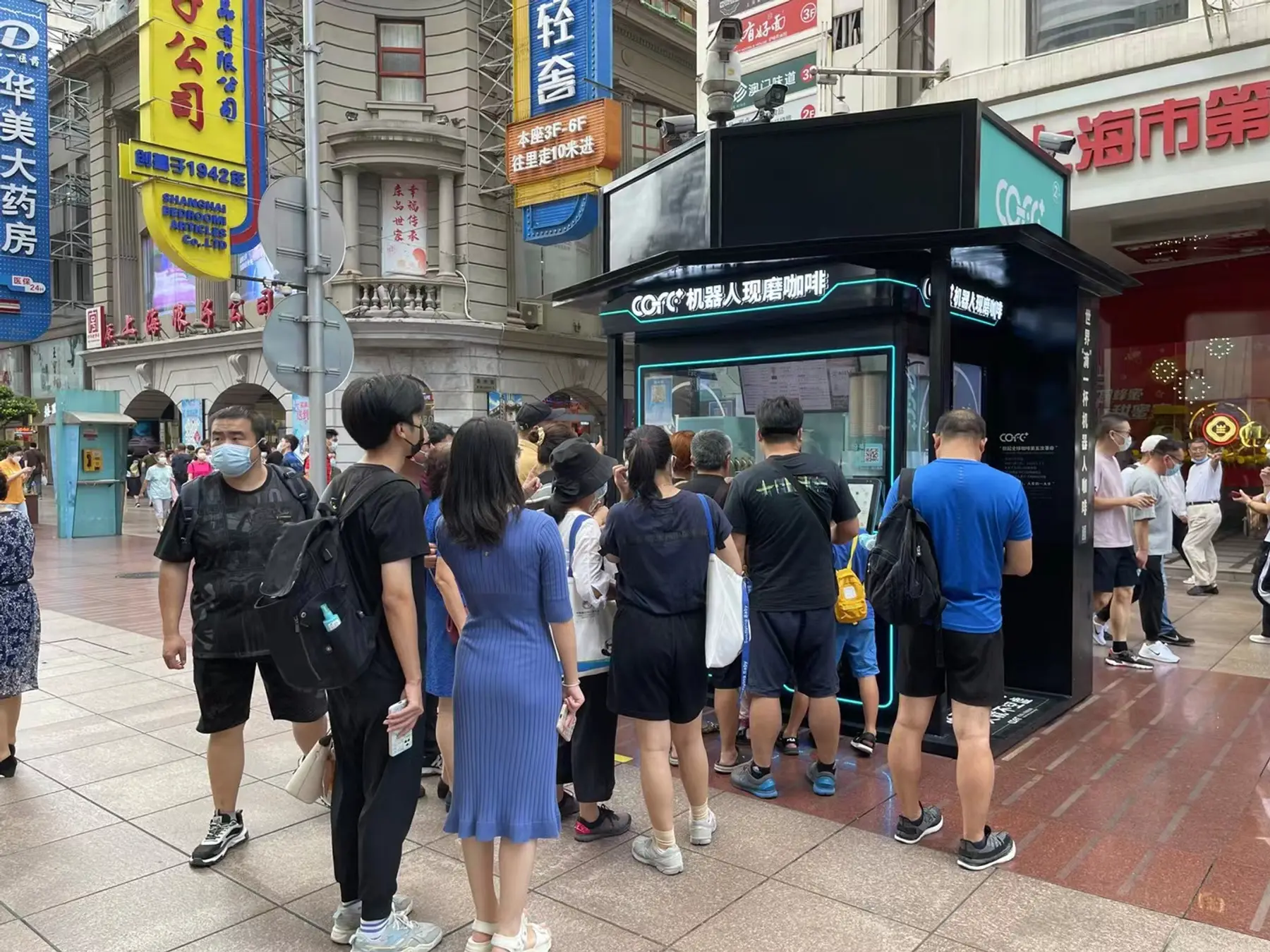
In the rapidly advancing world of automated retail and food robotics, the technology inside the machine is only half the story. For any business considering a robotic coffee solution-be it a hotel, an airport, or a corporate campus-the most critical ingredient isn’t the coffee bean or the brewing mechanism. It’s trust. Trust that the machine is safe, that the quality is consistent, and that the investment is compliant with regulations across the globe.
Direct answer: Robotic coffee certifications are not paperwork. They are risk controls for safety, legal access, and procurement confidence across regions.
TL;DR / Key Takeaways
- FDA and CE coverage are core market-access requirements.
- CB Scheme reduces certification friction across multiple countries.
- RoHS, WEEE, and ISO 14001 support environmental and ESG requirements.
- ISO 9001 and ISO 45001 indicate process reliability and operating discipline.
This is where COFE+ distinguishes itself not just as a technology leader, but as a global benchmark for safety, quality, and compliance. While many focus on the user interface or the taste of the coffee, the true measure of a world-class food automation product lies in its certification portfolio. These documents are more than just paperwork; they are the objective, third-party validation of a commitment to excellence.
This article will demystify this complex but crucial topic. We will break down what COFE+‘s key certifications mean, why they are so difficult to obtain, and most importantly, why they matter profoundly for your business.
The Global Standard: A Comprehensive Overview
Before diving into individual certifications, it’s essential to understand the sheer breadth of COFE+‘s compliance. Unlike competitors who may cherry-pick certifications for specific markets, COFE+ has built a comprehensive portfolio designed for global, multi-market deployment from day one. This strategy significantly de-risks investment for international partners.
| Certification Category | Key Certifications | Market & Purpose |
|---|---|---|
| Food & Product Safety | FDA (USA), CE (EU), CB Scheme (Global) | Ensures the machine is safe for consumers and operators. |
| Material & Health Safety | FDA Food Contact, RoHS, CQC | Guarantees all materials touching the beverage are non-toxic. |
| Environmental & ESG | WEEE, RoHS, ISO 14001 | Proves commitment to sustainability and responsible manufacturing. |
| Manufacturing & Quality | ISO 9001, ISO 45001 | Validates a world-class quality and safety management system. |
The Crown Jewel: FDA Compliance (The North American Passport)
The most significant and challenging certification in the COFE+ portfolio is its compliance with the U.S. Food and Drug Administration (FDA) standards. For any food equipment, this is the absolute gold standard for safety and the non-negotiable ticket to the lucrative North American market.
What is it? The FDA does not offer a simple “certification.” Instead, it mandates that any material that comes into contact with food—known as a Food Contact Material (FCM)—must be proven with “reasonable certainty of no harm to consumers.” This applies to every single component in the coffee-making path: pipes, grinders, containers, and seals.
Why it’s so difficult: The data requirements are famously cumbersome. Manufacturers must provide extensive physical and chemical data, technical specifications, and migration testing to prove that no harmful substances can leach into the beverage. For a complex machine like a coffee robot, this is a monumental undertaking. Successfully navigating the FDA’s Food Contact Notification (FCN) process is often described by industry experts as a “technical barrier breakthrough.”
Why it matters to you: FDA compliance is the ultimate assurance of product safety. It means every component has been rigorously vetted. For a B2B customer, this eliminates significant legal and reputational risk. It also signals a level of quality and engineering rigor that is exceptionally rare in the robotic coffee space, making COFE+ a trusted partner for deployment in sensitive environments like hospitals, schools, and corporate headquarters.
The European Passport: CE Marking
If FDA is the key to North America, the CE mark is the mandatory passport for the entire European Union (EU), a market of 450 million people. The “CE” stands for Conformité Européenne (French for “European Conformity”).
What is it? A CE mark on a product indicates that the manufacturer declares conformity with the high safety, health, and environmental protection requirements of the applicable European directives. For a coffee robot, this involves multiple directives, including the Machinery Directive, the Low Voltage Directive, and the Electromagnetic Compatibility (EMC) Directive.
Why it matters to you: While less intensive than the FDA process, CE marking is a comprehensive legal requirement. A missing or improper CE mark can lead to products being impounded at the border, delaying projects by months. COFE+‘s complete CE certification ensures seamless market access across all 27 EU member states, providing reliability and peace of mind for European partners.
The Global Multiplier: The IECEE CB Scheme
This is perhaps the most powerful, yet least understood, certification in the portfolio. The IECEE CB Scheme is an international system for the mutual recognition of product safety test reports among its 50+ member countries.
What is it? Think of it as a “one test for the world” program. A product is tested once by a CB-accredited National Certification Body (NCB). The resulting CB Test Report can then be used to obtain national safety certifications in any other member country, often without the need for extensive re-testing.
Why it matters to you: This is a massive strategic advantage for global expansion. Member countries include major markets like Australia, Japan, South Korea, Mexico, and key European nations. For a multinational corporation looking to deploy coffee robots across different regions, the CB Scheme drastically reduces the time, cost, and complexity of local compliance. It demonstrates that COFE+ is not just built for one market, but engineered for the world.
The Sustainability Credentials: RoHS, WEEE, and ISO 14001
In today’s business climate, sustainability is not a buzzword; it’s a core procurement requirement. COFE+‘s environmental certifications prove its commitment to responsible manufacturing and lifecycle management.
| Certification | What It Means | Why It Matters |
|---|---|---|
| RoHS | Restriction of Hazardous Substances. Restricts the use of specific hazardous materials (like lead, mercury, and cadmium) in electronic products. | Protects the environment and ensures the product is safe for handling and disposal. A key requirement for EU market access. |
| WEEE | Waste Electrical and Electronic Equipment. Mandates responsible producer-led collection, recycling, and recovery for electronic products. | Shows a commitment to a circular economy and reduces the environmental footprint of the hardware. Crucial for ESG-focused clients. |
| ISO 14001 | Environmental Management System. An international standard for designing and implementing an effective environmental management system. | Proves that the manufacturing process itself is designed to minimize environmental impact, from resource use to waste management. |
Why it matters to you: For any company with an ESG (Environmental, Social, and Governance) mandate, these certifications are non-negotiable. They provide third-party validation that your partnership with COFE+ aligns with your corporate sustainability goals. It moves the conversation from simply providing an amenity to contributing to a greener, more responsible workplace.
The Foundation of Quality: ISO 9001 & ISO 45001
Finally, these certifications speak to the quality and integrity of the manufacturing process itself.
- ISO 9001 (Quality Management): This is the world’s most recognized standard for quality management systems. It proves that the manufacturer has robust, repeatable processes for design, production, and delivery to ensure consistent quality.
- ISO 45001 (Occupational Health & Safety): This standard focuses on creating a safe and healthy workplace. It demonstrates a proactive approach to preventing work-related injury and ill health.
Why it matters to you: These certifications are a proxy for reliability and professionalism. They indicate that COFE+ is produced in a world-class facility with rigorous controls. For a B2B customer, this translates to higher uptime, better product consistency, and the assurance of partnering with a responsible and ethical manufacturer.
Conclusion: The Compounding Value of Trust
A single certification can be a selling point. A comprehensive, global portfolio of certifications is a statement of identity. It signals a deep-seated commitment to safety, quality, and global partnership that goes far beyond the competition.
For businesses evaluating robotic coffee solutions, the question should not be “Does it make good coffee?” but rather, “Can I trust it?” Can I trust it with my employees’ health? Can I trust it to comply with local laws? Can I trust it to align with my company’s values?
With COFE+, the answer, validated by the world’s most respected authorities, is a resounding yes. That trust is the hidden ingredient, and it makes all the difference.
FAQ: Robotic Coffee Certifications
Which certification matters most for U.S. rollout?
FDA-related food-contact evidence is usually the highest-priority risk control for U.S. deployments.
Why is the CB Scheme important for global expansion?
It allows one safety test report to support multi-country approvals, reducing time and cost.
How do these certifications affect procurement decisions?
They reduce legal uncertainty, improve compliance confidence, and shorten due-diligence cycles.