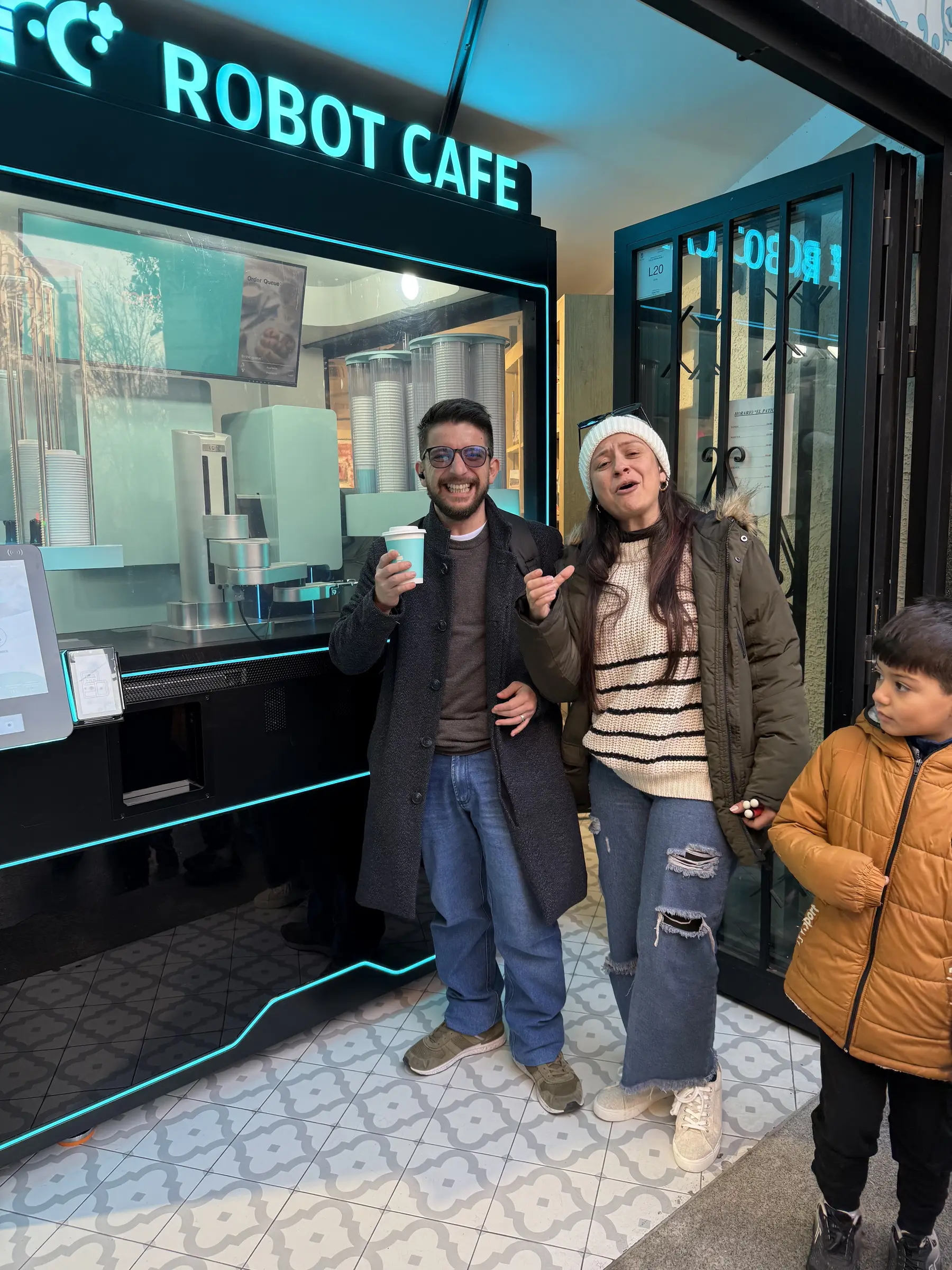
Who this is for: pilot teams selecting autonomous coffee kiosk locations with limited risk tolerance.
Direct answer: A robust site selection checklist for autonomous coffee kiosks includes three layers: demand quality, operating feasibility, and downside resilience. A site is not ready unless all three layers pass.
TL;DR / Key Takeaways
- Site quality is the first risk-control gate in deployment.
- Demand quality is about conversion, not raw traffic.
- Operating friction can kill payback even when demand looks strong.
- Downside scenarios should be mandatory before commitment.
Quick answer
Use a three-layer checklist before approving any pilot site:
- demand quality (not just raw traffic)
- operating feasibility (service, access, power)
- downside resilience (what happens if assumptions miss)
If any one layer is uncertain, keep the site in hold status.
Layer 1: Demand quality
Check whether traffic is actually convertible:
- repeatable flow by time band
- dwell time near ordering point
- queue tolerance and purchase intent
- weekday/weekend variance
Avoid approving a location purely on headline footfall.
Layer 2: Operating feasibility
Confirm deployment constraints early:
- power and utilities readiness
- replenishment route and service windows
- waste handling and cleaning access
- incident response ownership
Operational friction compounds faster than expected in unattended pilots.
Layer 3: Downside resilience
Run a downside scenario before commitment:
- lower-than-expected cups/day
- promotional pricing pressure
- higher replenishment labor load
- temporary downtime events
If payback breaks under modest downside stress, the location is not yet deployment-ready.
Pre-approval checklist table
| Layer | Core Question | Approve if… |
|---|---|---|
| Demand quality | Will users buy repeatedly? | Conversion signals are stable across dayparts |
| Operating feasibility | Can service stay predictable? | Access, utilities, and response ownership are clear |
| Downside resilience | Can economics survive misses? | Conservative scenario remains acceptable |
Decision links for this pilot
Use these references before making a go/no-go decision:
- Evaluate technical fit: Comparison
- Review investment framework: Whitepaper
- Download diligence pack: Download Center
- Pressure-test assumptions: ROI Calculator
FAQ: Autonomous Coffee Kiosk Site Selection
What should block a site first?
Unclear service access and ownership. Operational uncertainty compounds quickly.
Is high footfall enough for approval?
No. High footfall without purchase intent usually underperforms revenue assumptions.
When should a site move from hold to go?
Only after all three layers pass with documented assumptions and downside visibility.
Pilot recommendation
For this test project, prioritize sites with fewer operational unknowns over sites with speculative upside. Early reliability creates better expansion options than fragile early wins.